
Toupee Haircuts: Traditional to Modern Styles
Through history, the toupee haircut has seen an amazing evolution, moving beyond its traditional roots and incorporating contemporary designs and methods. Toupee haircuts are a popular option for people who are coping with hair loss or who want to improve their look, and they have seen substantial development in terms of design, materials, and general aesthetics. This essay will examine the fascinating development of toupee haircuts, from their traditional styles to the cutting-edge trends that are shaking up the market. As we explore the development of toupee haircuts throughout history, we invite you to join us on this historical trip.
The Traditional Toupee Haircuts: Foundations of a Timeless Style
The roots of the toupee haircut can be traced back centuries, where wigs and hairpieces were used as a solution to hair loss and baldness. These early toupees were crafted from natural materials, such as human hair or animal fibers, and were often designed to cover the entire head. The focus was on creating a natural-looking appearance, and wearers sought to replicate the hairstyles of the time. Toupees were meticulously handcrafted to blend seamlessly with the wearer’s existing hair, providing a sense of confidence and aesthetic appeal.
The Rise of Customization: Personalizing Toupee Haircuts
As the demand for toupee haircuts grew, the industry recognized the importance of customization. Hair professionals began offering personalized services, tailoring toupees to suit each individual’s unique hair color, texture, and style preferences. This marked a significant shift from the one-size-fits-all approach, allowing wearers to achieve a more natural and personalized look. Customization options expanded to include hair length, density, and even specific hairline designs, ensuring a seamless integration with the wearer’s natural hair. This focus on customization allowed individuals to reclaim their identity and embrace their own sense of style.
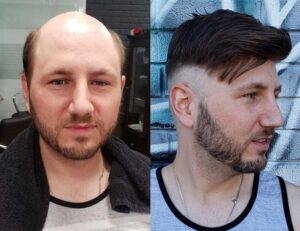
Innovations in Materials: Enhancing Comfort and Durability
Advancements in technology and materials have revolutionized the toupee haircut industry. While traditional toupees were primarily made from human hair, synthetic hair options have gained popularity due to their versatility and durability. Synthetic hairpieces are now designed to mimic the look and feel of natural hair, providing wearers with a wide range of style possibilities. Additionally, lightweight and breathable base materials, such as lace or monofilament, have significantly improved comfort and breathability, allowing for longer hours of wear without discomfort. These innovations have made toupee haircuts more accessible and comfortable for individuals with diverse needs.
Natural-Looking Hairlines: The Art of Seamless Integration
One of the most remarkable advancements in modern toupee haircuts is the focus on creating natural-looking hairlines. Hair professionals have mastered the art of crafting hairpieces with realistic hairlines that seamlessly blend with the wearer’s existing hair. By meticulously designing the hairpiece to mimic the growth patterns and density of natural hair, the transition between the toupee and the wearer’s scalp becomes virtually undetectable. This attention to detail ensures a more undetectable and natural appearance, boosting the wearer’s confidence and eliminating any concerns about their hairpiece being noticeable.
Contemporary Trends: Modern Styles and Techniques
In recent years, toupee haircuts have embraced contemporary trends, allowing individuals to express their personal style through their hairpieces. The influence of popular culture and fashion trends has led to the incorporation of modern haircutting techniques into toupee designs. From textured hairstyles and layered cuts to trendy fades and beard integration, wearers now have a wide range of options to choose from. These modern styles not only cater to fashion-forward individuals but also provide a fresh and youthful appearance to anyone seeking a toupee haircut. The versatility and adaptability of toupee haircuts have made them a fashion statement in their own right.
Conclusion
The evolution of toupee haircuts is a testament to the continuous progress and innovation in the field of hair restoration. From their humble beginnings as simple hairpieces to the sophisticated and realistic options available today, toupee haircuts have undergone remarkable transformations. The focus on customization has been a driving force behind these advancements. Hair professionals now offer personalized services that take into account an individual’s hair color, texture, density, and style preferences. This level of customization ensures that each toupee is uniquely tailored to the wearer, resulting in a natural and seamless integration with their existing hair.
Advancements in materials have also played a significant role in the evolution of toupee haircuts. While traditional toupees were typically made from human hair, the development of high-quality synthetic fibers has expanded the possibilities. Synthetic hairpieces now closely resemble natural hair, offering a wide range of colors, textures, and styles. These synthetic options are often more affordable and easier to maintain than their human hair counterparts, making them accessible to a broader range of individuals.
Another crucial aspect of modern toupee haircuts is the emphasis on creating natural-looking hairlines. Hair professionals have honed their skills in designing hairpieces with realistic hairlines that blend seamlessly with the wearer’s scalp. Through meticulous craftsmanship, the hairpiece is strategically placed and styled to mimic the natural growth patterns of hair. This attention to detail ensures that the toupee appears indistinguishable from the wearer’s real hair, instilling a sense of confidence and eliminating any concerns about its detectability.

Incorporating contemporary trends into toupee haircuts has also propelled their evolution. Inspired by popular culture, fashion, and grooming trends, modern toupee haircuts offer a range of styles and techniques that cater to diverse tastes. Whether it’s textured hairstyles, layered cuts, trendy fades, or even beard integration, wearers can choose a toupee that aligns with their personal style and desired aesthetic. These modern styles not only enhance the wearer’s appearance but also contribute to a youthful and fashionable image.
Ultimately, the evolution of toupee haircuts has transformed them into more than just a practical hair restoration solution. They have become a tool for self-expression, identity, and confidence. Today, individuals can select toupees that not only address their hair loss concerns but also allow them to embrace their desired look with pride. Whether someone prefers a discreet and natural-looking toupee or a bold and fashion-forward statement piece, toupee haircuts empower individuals by providing them with the means to regain control over their appearance and project their unique sense of self.
In conclusion, the evolution of toupee haircuts showcases the remarkable advancements and innovation within the hair restoration industry. Through customization, advancements in materials, natural-looking hairlines, and incorporation of modern styles and techniques, toupee haircuts have evolved into sophisticated and versatile options. They offer individuals a seamless blend of functionality and style, allowing them to confidently embrace their desired look. With the continued progress in technology and the commitment of hair professionals, the future of toupee haircuts holds even more exciting possibilities for individuals seeking hair restoration solutions.